
Maple Grove Community Hub
Program: Intergenerational Community Center
Project Type: Civic Building
Location: Stowe, VT
Paired Project: Bay Breeze Youth & Elderly Care Center, Apalachicola, FL
Date: April 2022

Concept
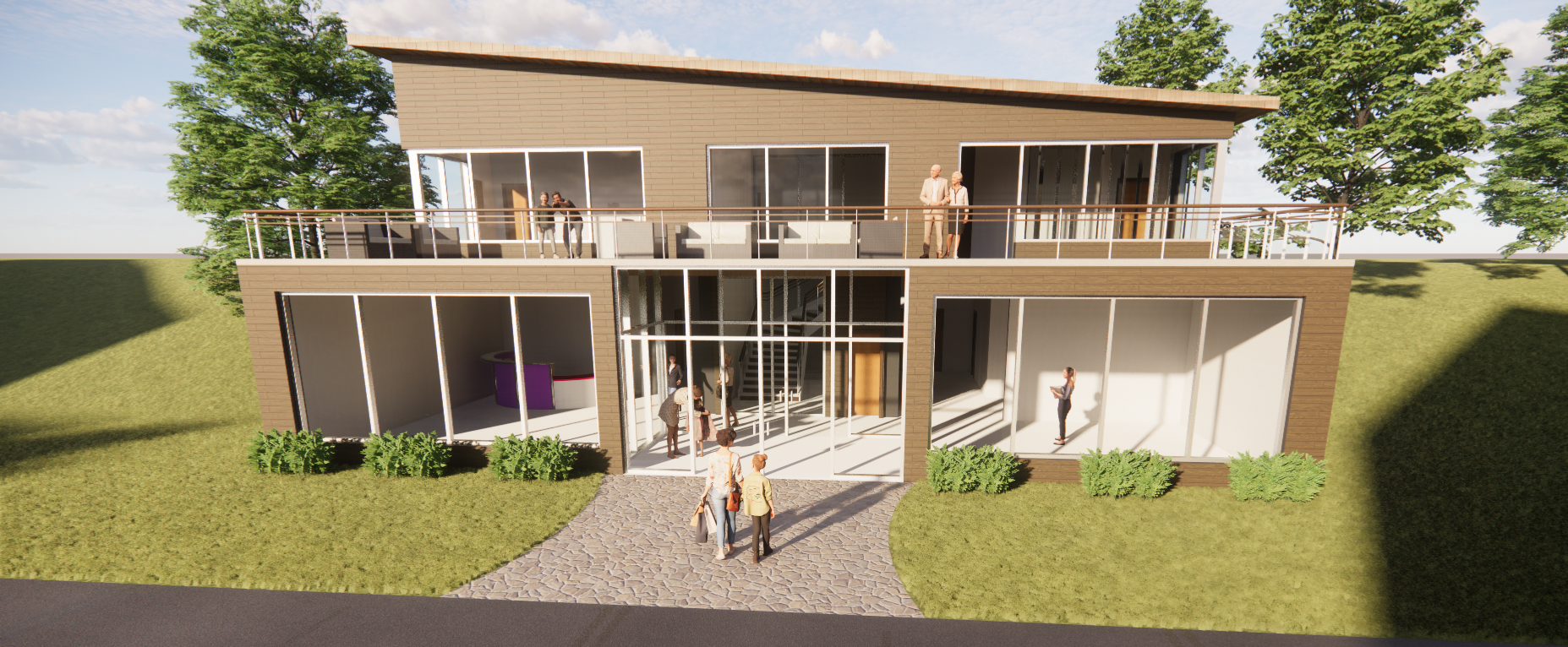
The Maple Grove Community Hub was designed as an intergenerational care center serving both youth and elderly populations in the cold climate of Stowe, Vermont. Developed in tandem with the Bay Breeze project in Florida, the goal was to explore and test passive heating and cooling strategies across drastically different climates.
Site & Climate
Located in northern Vermont, the site experiences long, harsh winters with heavy snowfall and short, mild summers. Passive heating, insulation, and solar orientation were prioritized to ensure occupant comfort and reduce reliance on mechanical systems.
Program
1. Multipurpose hall for community gatherings
2. Classrooms and workshop spaces shared by youth and elderly
3. Health and wellness rooms for aging care
4. Play and recreational spaces adapted for all ages
5. Flexible open areas for communal interaction
Passive Design Strategies
- South-facing windows: Captured maximum winter solar gain.
- Large glazing areas: Increased daylight penetration and natural heat during colder months.
- Compact floor plan: Reduced heat loss by minimizing exposed surface area.
- Partially earth-bermed design: Embedded into the site’s slope to leverage the earth as thermal mass and insulation.
In contrast, the Florida-based Bay Breeze project emphasized shading, openness, and ventilation to combat heat and humidity.
Energy Analysis
Maple Grove Hub (Vermont): 126 kBtu/sf/year
Bay Breeze Center (Apalachicola): 71.2 kBtu/sf/year
Findings:
While the Vermont model successfully integrated cold-climate passive strategies, it ultimately consumed more energy overall than the Florida model. The challenges of retaining heat, balancing daylight, and avoiding excessive glazing loads illustrate the complexity of cold-climate passive design.
While the Vermont model successfully integrated cold-climate passive strategies, it ultimately consumed more energy overall than the Florida model. The challenges of retaining heat, balancing daylight, and avoiding excessive glazing loads illustrate the complexity of cold-climate passive design.
Key Takeaways
- Cold-climate strategies require balancing solar gain with insulation and glazing efficiency.
- Earth-bermed structures can provide insulation benefits but must be carefully managed for light and ventilation.
- Energy comparisons underscore that passive design is highly climate-dependent.
- Intergenerational centers act as testing grounds for sustainable strategies, revealing both opportunities and limitations in real-world contexts.